Gravel Yard Overrun With Weeds Again? Why They Keep Coming Back Through the Rock
October 15, 2026
Quick Answer: Weeds return through gravel because the rock itself was never the barrier. Seeds blow in, settle into the dust and debris that collect between stones, and sprout the moment irrigation or a monsoon storm gives them water. Fabric underneath slows the roots of weeds that were already there, but it does nothing about seeds growing in the top layer. Lasting control in a West Valley rock yard comes from removing weeds while they are small, stopping seeds from germinating before the season starts, fixing the water that feeds them, and keeping the surface clean of debris.
You spent a Saturday on your knees pulling weeds out of the front yard, and the gravel looked clean by sundown. Three weeks later there is a green fuzz across the same beds, a few tall stalks near the block wall, and a stubborn grass that snaps off in your hand and comes back thicker. You chose rock because everyone told you it was the low maintenance option. Now it feels like the opposite, and you are starting to wonder if you did something wrong during installation or if every rock yard in Litchfield Park and Goodyear ends up this way.
You did not do anything wrong, and the rock is not the problem. Gravel is a ground cover, not a weed killer. Once you understand where the weeds are really coming from, the pattern makes sense and so does the fix.
Why Gravel Does Not Block Weeds on Its Own
Rock sits on top of the soil. It shades the ground a little, and it keeps the surface from crusting, but it leaves plenty of room for seeds. A layer of gravel two inches deep still has air gaps between every stone, and those gaps are exactly where wind blown seed, dust, and bits of dead leaf collect.
The West Valley makes this worse than most places. Open desert and undeveloped lots surround many neighborhoods in Buckeye, Waddell, and Surprise, and seed travels in on every gusty afternoon. Add the dust that settles after each haboob season and the fine particles that break off decomposed granite as it weathers, and you get a thin layer of fine soil sitting right on top of the rock. To a seed, that layer is a perfectly good seedbed.
Weeds do not need much. A pinch of dust, a little moisture, and warm soil are enough for most desert annuals to germinate. This is why you can clear a bed on Saturday and see new seedlings by the following weekend if it rains or the irrigation runs.
The Fabric Under the Rock Only Does Half a Job
Most rock yards in the area were installed over woven or fabric weed barrier. It does help. It keeps the rock from sinking into the native soil, and it holds back many weeds that are already growing underneath the bed. The trouble starts a few years in.
As organic material builds on top of the fabric, it forms a layer where seeds can germinate. The new roots search for moisture, find tiny gaps in the weave or along the seams, and push through. Once a shoot reaches sunlight above and moisture below, it grows like it has no barrier at all. Sun exposure also weakens fabric over time, especially in the long Arizona summers, and edges that were never fully sealed or overlapped let weeds slip in from the sides.
So when you see weeds that seem to be growing straight out of the fabric, they usually are growing in the debris above it and reaching down. Pulling them leaves a hole in the fabric, which then makes the next round easier.
Tip: Look at the base of a weed you just pulled. If the roots are short and tangled in a layer of fine dust and rock grit, the seed germinated in the top of the bed. If the root went deep through the fabric into the soil, a weed was likely already there when the rock went down, and it needs a different approach.
Match the Weed to the Season
Not every weed in your yard shows up for the same reason, and that matters because the timing of your treatment depends on it. The University of Arizona turf program separates desert weeds into winter annuals and summer annuals, and rock yards see both.
Winter annuals sprout after fall temperatures drop and winter rain arrives. They grow through the cool months, bloom in late winter and spring, and drop seed before the heat. Summer annuals such as spurge and several grassy weeds germinate when soil warms in spring and then explode once monsoon moisture arrives. Because a rock bed can host both groups, a single treatment in one season will always leave the other group free to take over.
Then there are the perennials. Bermuda grass is the most common one in West Valley yards. It spreads by runners and underground stems called rhizomes, so it slips under the edge of a border, through gaps in fabric, and comes up in the middle of a bed. If you see a grass that stays green through hot afternoons and sends stems along the surface of the rock, that is likely Bermuda. Goathead, bindweed, and nutsedge also fall into the hard to remove category, each with deep roots or tubers that regrow when you pull only the top.
Why Hand Pulling Alone Does Not Keep Up
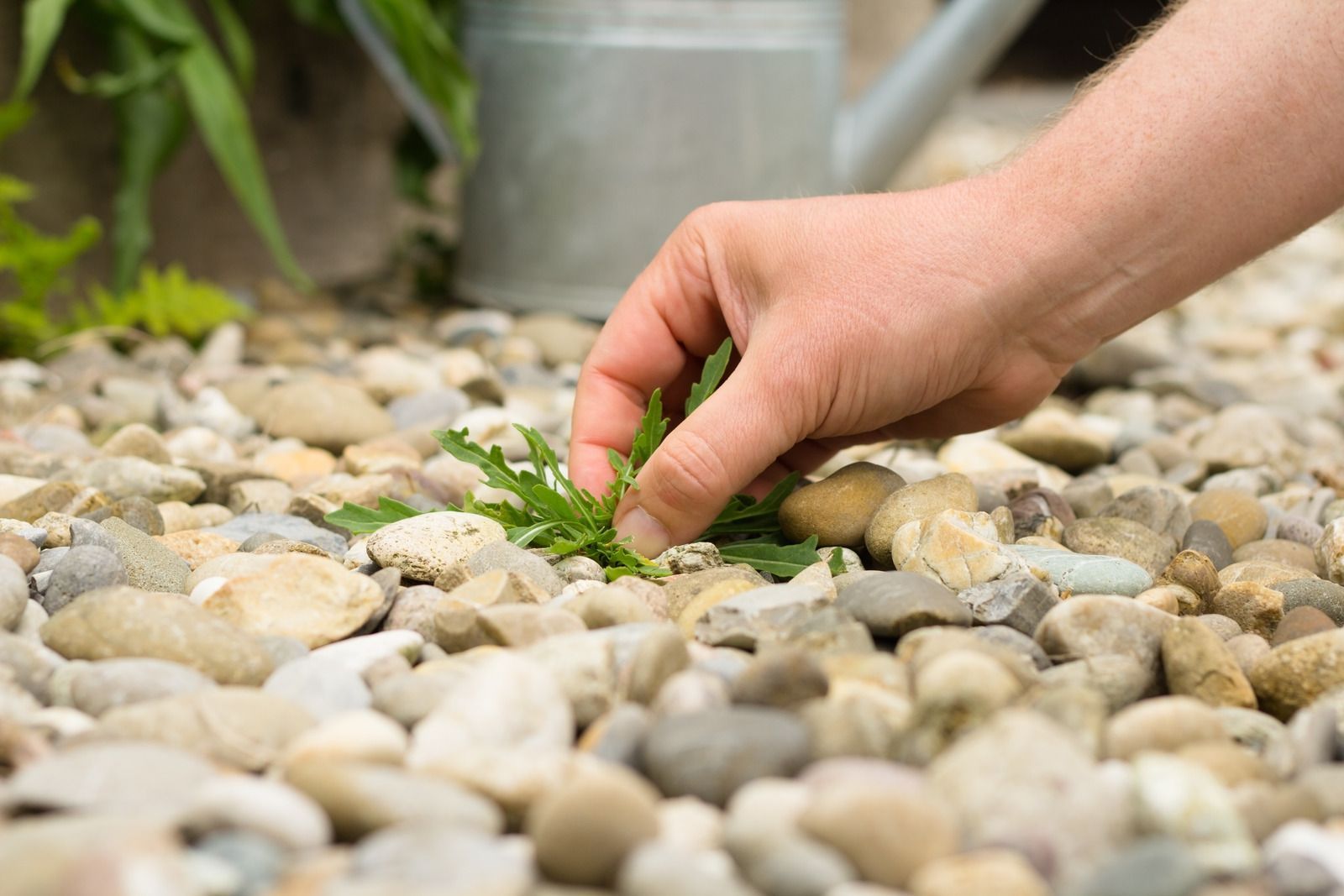
Pulling weeds works when you pull them early and get the roots. In a gravel yard it is harder than it looks. Roots wrap around stones and snap at the surface. Bermuda grass and bindweed break off, leaving the part underground ready to resprout. Goathead leaves behind seeds in the ground that can wait for years. And any weed that has already flowered has probably dropped seed before you reach it.
The bigger issue is timing. If you pull only after the yard looks bad, you are working against a seed bank that has had weeks to build. The University of Arizona turf program notes that weeds that are mature, flowering, or setting seed are generally not practical to control with herbicide after the fact. The same logic applies to hand pulling. The window to deal with weeds cheaply and effectively is when they are small, which is why a regular schedule beats a big cleanup every few months.
Stopping Weeds Before They Sprout
A pre emergent herbicide creates a treated zone in the top layer of soil that stops germinating seeds from developing roots. It does not kill weeds that are already up, so it works best on a bed that was recently cleared. Timing matters more than product choice.
For the low desert, extension guidance points to applying treatments ahead of each season: one in early fall, before winter weeds start to germinate, and another in late winter, before summer weeds wake up. A reapplication when monsoon rains begin helps cover the second flush of summer seed. These products also have to be activated by rain or irrigation so they move into the top two to three inches of soil. In a dry stretch from April through June, that means watering them in on purpose.
Rock changes how that works. In a gravel bed, the product has to reach the soil surface through the stone, so even coverage and proper watering in make a real difference. This is one reason a do it yourself application sometimes seems to fail: it sat on top of the rock and never made it down to where seeds were germinating.
Warning: Do not apply any herbicide, pre emergent or otherwise, near the root zone of desert trees, shrubs, or cacti without checking the label. Some products can injure plants if they wash toward the roots, and heavy monsoon runoff in a rock bed moves material farther than you expect.
Spot Treating What Is Already Up
Once weeds are growing, a post emergent product that goes on the leaf works best on small, actively growing plants. The University of Arizona turf program notes that plants that are not drought stressed and have been recently watered absorb more, and that early morning or evening application is better than midday heat. In practice that means treating after a good irrigation cycle and before the temperature climbs, not on a 108 degree afternoon.
Woody stems, waxy leaves, and hairy leaves all resist absorption, which is why a stubborn weed can look unbothered after a first pass. Bermuda grass and nutsedge often need repeat visits. Purple nutsedge, which is more common in Arizona than the yellow type, is usually treated in early summer and again several weeks later. A professional crew works on that schedule rather than expecting one spray to finish the job.
For beds with sensitive plants, natural areas, or places near play areas, mechanical removal with careful hand digging can be the better choice. It takes more labor, but it avoids chemical contact in spots where you want to limit it. A good program uses both approaches and chooses based on the weed and the location.
Fix the Water Feeding the Weeds
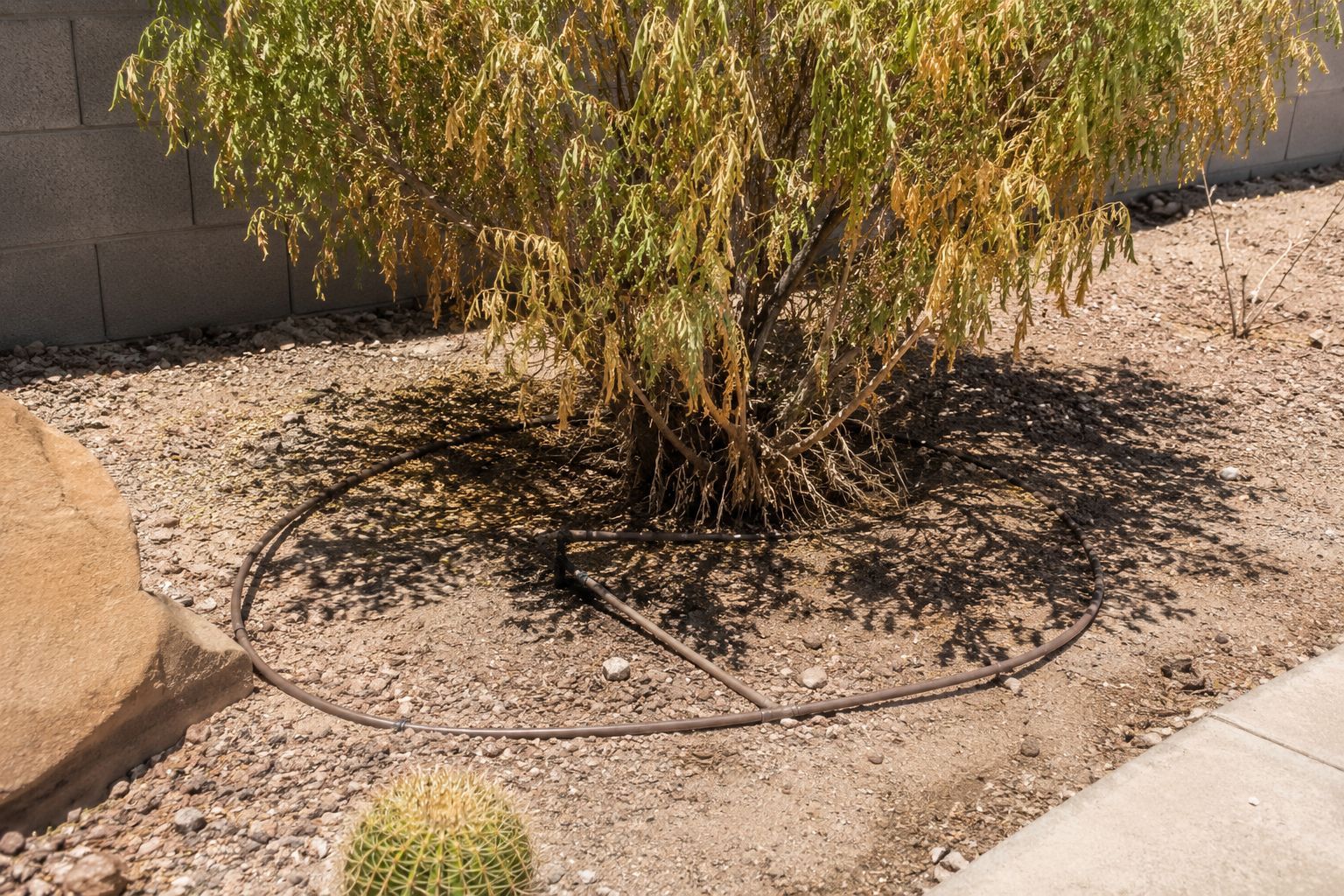
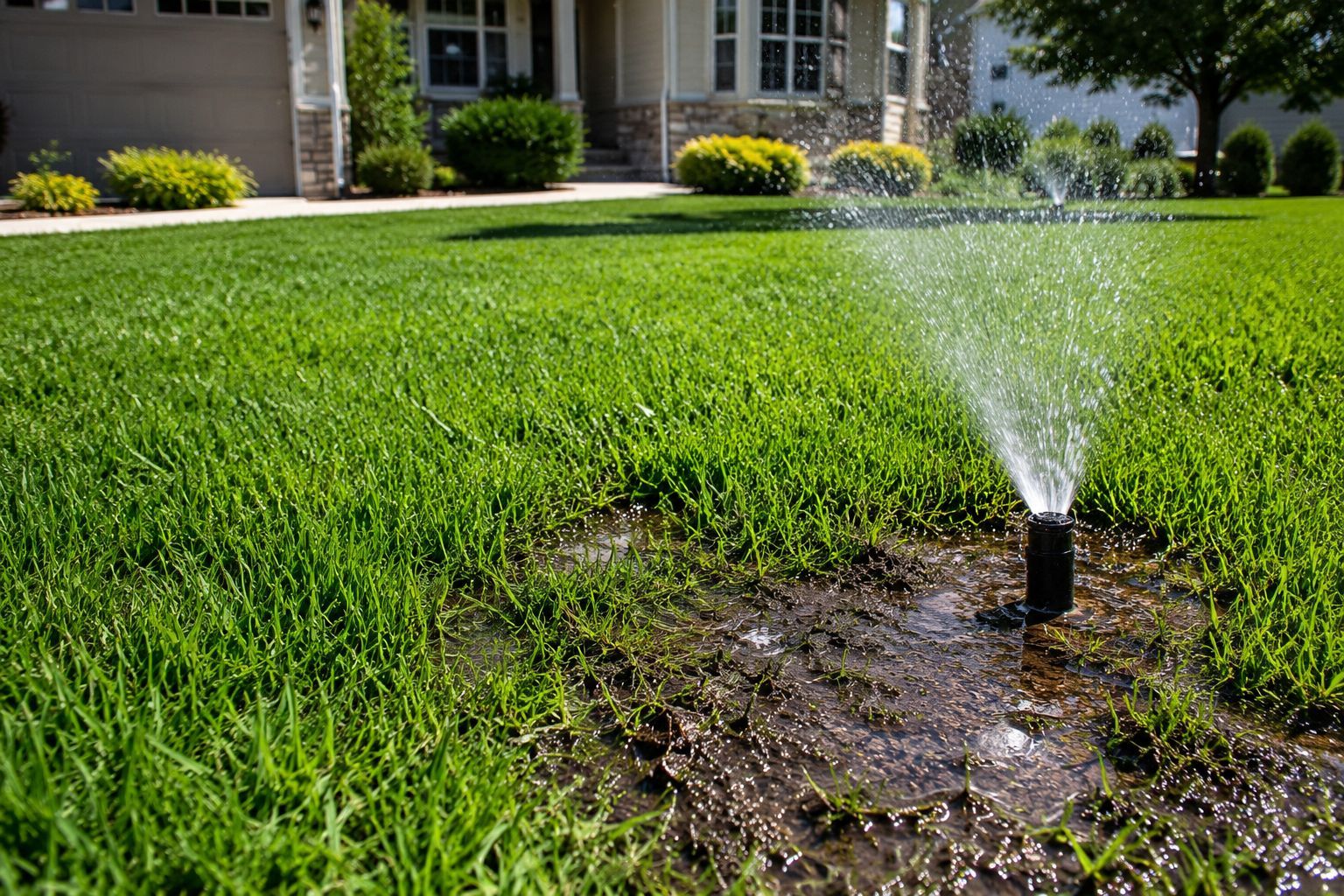
Nothing sprouts in a rock yard without water, and in many yards the water source is your own irrigation. Drip lines that leak at a fitting, emitters that drift away from their plant, and spray heads that overspray onto gravel all create wet spots where weeds thrive. You can often see them: a strip of green along a drip line while the rest of the bed stays bare.
Check your system when the yard is dry. Run each zone and watch for water spreading past the plant it was meant for. Weeds follow water, and removing that water is often the fastest way to cut down on new growth. The same fix helps lower your water use, so it pays off twice.
Keep the Surface Clean and Topped Up
Because debris is what gives weed seeds a place to grow, keeping the surface clean prevents a lot of problems. Blowing or raking leaves, mesquite pods, and palm fronds out of the bed on a regular schedule keeps the seedbed from forming. A leaf blower on a low setting works well on gravel, while a hard rake pulls up rock and thins the layer.
Rock also settles and scatters. Over the years foot traffic, rain, and mowing equipment push stone out of the bed and thin the cover, exposing fabric or soil. A thin spot is an open invitation. Topping up to an even depth, usually two to three inches, restores the shade and the physical barrier. Decomposed granite breaks down slowly, which creates more fine particles, so older beds tend to need more attention than coarse river rock.
What a Maintenance Plan Looks Like in the West Valley
A realistic plan for a gravel yard follows the seasons instead of reacting to the mess.
Early Fall
Apply pre-emergent herbicide before winter weeds emerge and clear debris.
Winter
Spot-treat surviving winter annuals while plants remain small and manageable.
Late Winter
Apply a second pre-emergent treatment before summer weeds begin emerging.
Spring And Summer
Monitor Bermuda grass and nutsedge, repeat treatments, and inspect irrigation systems for leaks.
After Monsoon Storms
Remove debris, inspect washed-out areas, and reapply treatments wherever necessary.
That calendar is simple, but it is what keeps a bed from falling behind. It is also why a one time cleanup rarely lasts. You are managing a living seed bank, and the work is steady and small rather than big and occasional.
Frequently Asked Questions
Why do weeds grow in gravel even with weed barrier fabric underneath?
Seeds settle into dust and debris on top of the fabric, then root through small gaps or seams. Fabric slows weeds starting underneath but cannot stop seeds sprouting above it.
How often should I treat a rock yard for weeds in the Phoenix area?
Most West Valley yards do best with seasonal treatment: a pre emergent in early fall and again in late winter, plus spot treatment between visits when needed.
Can I just pull the weeds by hand?
Hand pulling works on small, young weeds if you get the roots. Bermuda grass, bindweed, and goathead regrow or leave seed behind, so pair pulling with a prevention schedule.
Is a pre emergent herbicide safe to use around desert plants?
Many are labeled for ornamental beds, but not all, and some can injure plants if they wash toward the roots. Check the label and have a professional treat near trees and cacti.
Why do more weeds show up after monsoon storms?
Monsoon rain adds moisture, carries seed and debris into beds, and wakes dormant seed in the soil. A pre emergent applied beforehand and a post storm check keep growth down.
Do I need to replace my rock to stop weeds?
Usually not. Most yards need a cleaner surface, repaired irrigation, topped up rock, and a steady treatment schedule. Replace rock only when it is thin, mixed with soil, or the fabric has failed.
A Rock Yard That Stays Clean Long Term
A gravel yard was never going to stay weed free on its own, and the rock itself was never meant to be the barrier. The weeds that keep returning come from seed settling into debris, water leaking where it should not, and stubborn perennials that regrow when pulled. Each cause has a workable answer, and those answers do best when they run together. Clean surfaces, repaired irrigation, topped up stone, and treatment timed to the seasons keep a bed from falling behind.
J Christie Landscape
has cared for rock yards in Litchfield Park and Goodyear, AZ for 14
years, and that time has shown how local weeds behave through every season. Knowing when winter annuals sprout, when Bermuda grass pushes back, and how monsoon moisture shifts seed around makes each visit more precise. Matching the
treatment to the weed
and the bed keeps small problems from becoming big ones, so the yard stays tidy and the gravel keeps doing the job it was chosen for.