Water Bill Spiking in the Summer? Why a Hidden Irrigation Leak Is Often the Cause
July 14, 2026
Quick Answer: When your water bill spikes in summer and nothing in the house has changed, a hidden irrigation leak is one of the most common culprits. A crack the width of a dime in a buried drip line can waste roughly 6,300 gallons a month, and because the damage is underground, you often never see a puddle. The fastest way to confirm it is a simple meter test with all water off, followed by a zone-by-zone inspection to find where the loss is happening.
You open the water bill, and the number is far higher than last month. Nobody filled a pool, no house guests stayed over, and the toilets are not running. Yet the total climbed by dollars you cannot explain, and it happened right as the desert heat set in. It is unsettling, because a bill that jumps with no obvious reason usually means water is leaving your property somewhere you cannot see.
In the West Valley, that somewhere is very often the irrigation system. Out here in the Sonoran Desert, the Arizona Department of Water Resources notes that as much as 70 percent of residential water use is outdoors. So when a bill spikes, the odds are strong that the problem lives in the pipes, valves, and drip lines feeding your yard, not the plumbing inside your walls. Here is why hidden irrigation leaks are so common in summer, how to recognize the signs, and how to confirm what is actually going on before you keep paying for water the ground is drinking.
Why the Bill Climbs Fastest in the Heat
The system simply runs more
In June and July, when afternoons push past 110 degrees, your controller is watering longer and more often to keep plants alive. A leak that barely registered in the mild spring, when the system ran a few minutes a couple of days a week, now runs through a much longer daily cycle. The same crack loses far more water simply because the valve is open far more of the time. That is the core reason a leak that existed quietly for months suddenly shows up as a painful summer bill.
Desert conditions work against buried lines
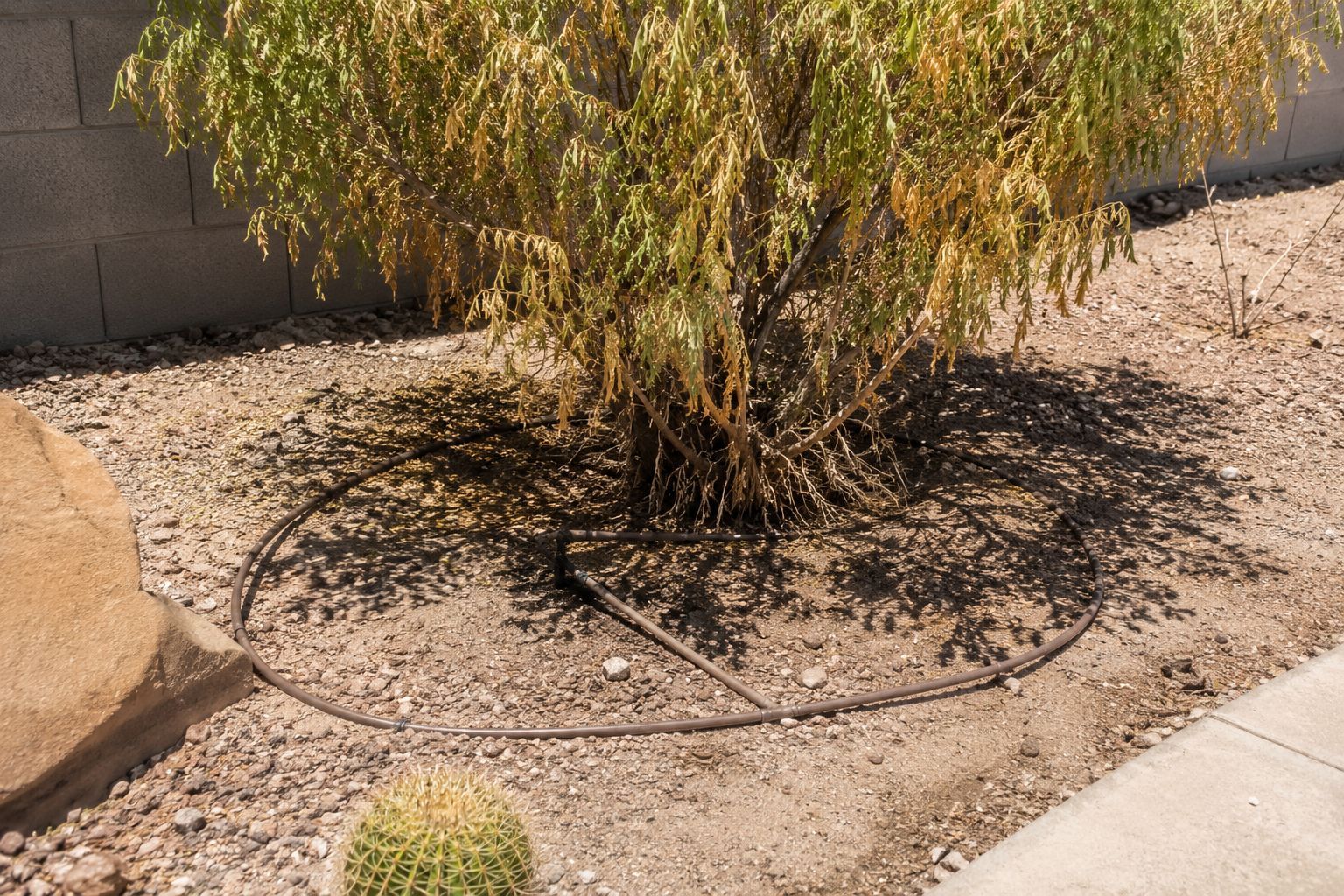
The ground here moves. Caliche, the hard calcium-carbonate layer under much of the Valley, shifts and settles, and monsoon storms saturate then bake the soil in cycles that stress buried pipe and fittings. Poly drip tubing gets brittle after years under intense sun and heat where it surfaces, then cracks at the connections. Add hard water that leaves mineral scale inside emitters and fittings, and you have a yard where small failures are routine rather than rare.
A tiny opening loses a shocking amount of water
The scale of loss surprises most homeowners. According to the EPA WaterSense program, an irrigation system with a leak only 1/32nd of an inch in diameter, about the thickness of a dime, can waste roughly 6,300 gallons of water per month. That is not a dramatic geyser. It is a hairline split you would never notice by walking the yard, quietly running every time the zone comes on.
The Signs a Hidden Leak Is Draining Your Yard
Because underground leaks rarely announce themselves with a fountain, you learn to read the smaller clues. Several point straight at the irrigation system.
A soggy or sunken spot that never dries
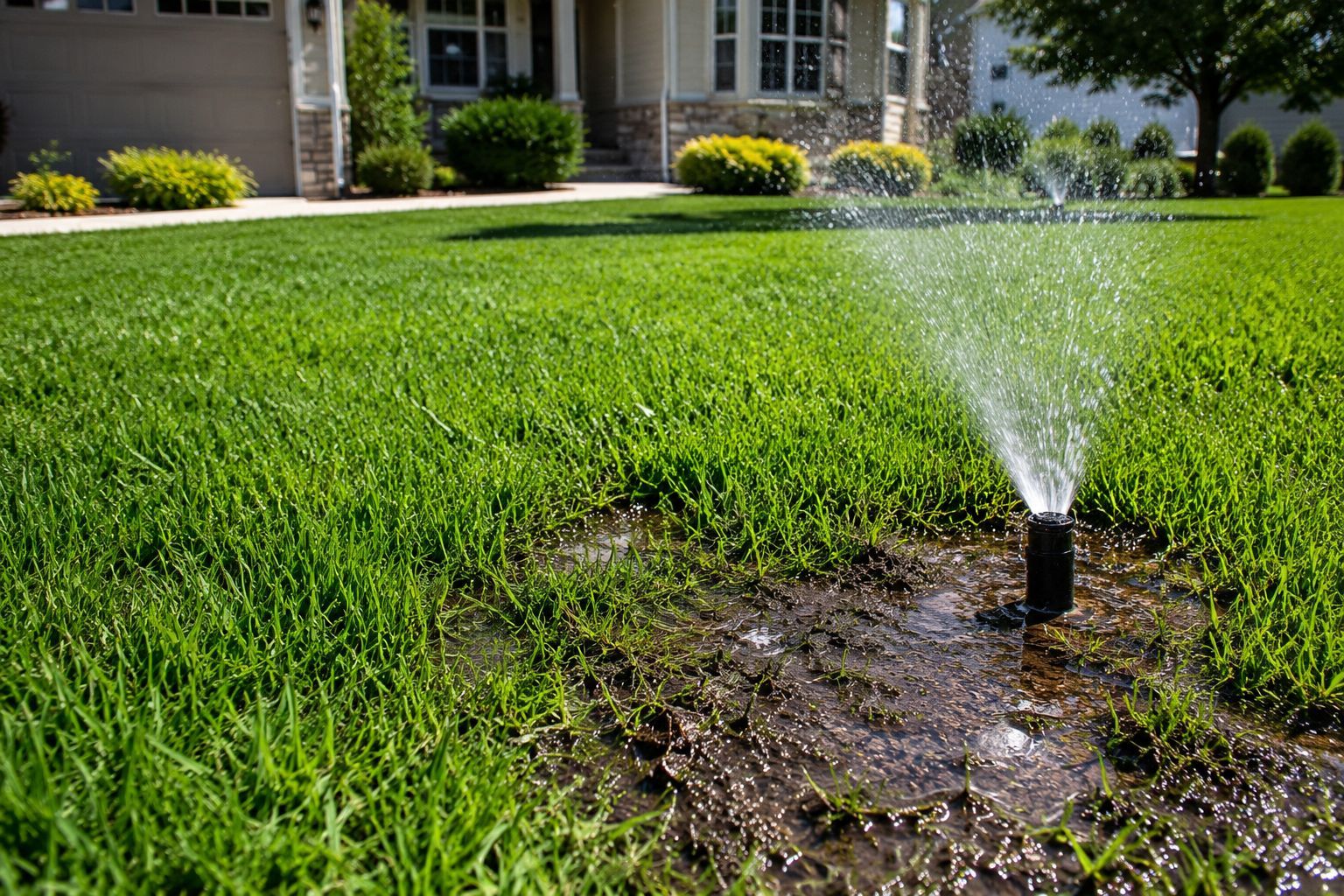
In a climate where the ground bakes hard between waterings, a patch of soil that stays damp, spongy, or muddy long after the cycle ends is a red flag. A depression forming in the gravel or a low spot in the yard can mean water is collecting underground from a cracked line below.
Unusually green or fast-growing weeds in one area
A buried leak feeds whatever is nearby. If one corner of a bed or one stretch along a drip line suddenly looks lush, or weeds are thriving there while the rest of the yard struggles, water is pooling underground at that point.
Plants downstream that look thirsty despite a running system
A leak upstream steals pressure and volume from the emitters past it. When the plants at the far end of a zone wilt even though the controller says the zone ran, water may be escaping through a break before it ever reaches them.
Water surfacing, bubbling, or running where it should not
Sometimes a leak does break the surface, showing up as a wet edge along a driveway, water seeping from under a valve box, or a trickle down the gutter well after watering finished. Any water moving where you did not put it deserves a look.
The bill itself, with no lifestyle change
The University of Arizona Cooperative Extension points out that a flow meter is one of the most reliable tools for catching a leak, because a change in flow that you did not cause almost always means something in the system failed. Your water meter is that same tool. A bill that jumps while your habits stayed the same is data worth trusting.
Tip: Photograph your drip layout and note where each zone runs before summer arrives. When a wet spot or dead plant shows up later, you can match it to a specific zone and line instead of guessing, which makes the leak far faster to pin down.
How to Confirm It Is Actually a Leak
Before you assume the worst, you can gather real evidence. A short, methodical check tells you whether water is escaping and helps narrow down where.
Run the meter test
This is the single most useful thing you can do. The EPA recommends turning off every water-using fixture inside and outside the home, then reading your water meter, waiting about two hours with nothing running, and reading it again. If the numbers moved at all, water is leaving the system somewhere. Many meters also have a small leak indicator, a tiny triangle or dial, that spins whenever water flows. If it turns with everything off, you have confirmation.
Isolate the irrigation side
Once you know water is escaping, the next question is whether the loss is indoor plumbing or the irrigation system. If your irrigation has its own shutoff valve, close it and repeat the meter test. If the meter goes still with irrigation isolated, the leak is out in the yard. If it keeps moving, the problem is on the household plumbing side instead.
Walk each zone with the water on
Run one zone at a time from the controller and watch it closely. Look for bubbling at the base of emitters, water shooting sideways from a cracked fitting, a soft muddy patch, or drip line that surfaces and sprays. Comparing zones tells you which one is losing water, and that is often enough to point to the failed section.
Check pressure behavior
The University of Arizona notes that a pressure difference greater than 1 PSI across a drip zone, or a sudden jump in flow, signals a break in a lateral or a stuck component. If one zone's emitters barely drip while another gushes, uneven pressure is a strong hint that a line is compromised.
Warning: Do not treat a spinning meter or an unexplained bill as something to watch and wait on. In peak summer heat, a hidden line running every single cycle can waste thousands of gallons before you catch it, and saturated soil against a foundation or hardscape can undermine it over time. Once the meter test confirms water is escaping, it is worth acting on rather than living with.
Frequently Asked Questions
How much water can a small irrigation leak really waste?
Even a small irrigation leak can waste thousands of gallons every month. During hot summer weather, longer watering cycles increase losses, raising utility bills while wasting significant amounts of water before homeowners notice obvious visible symptoms.
How do I tell if the leak is in my irrigation system or inside the house?
Turn off all household water, record your meter reading, wait two hours, and check again. If usage continues, isolate the irrigation system. A stopped meter indicates the leak exists within irrigation rather than household plumbing.
Can a leak exist even if I never see water in the yard?
Yes. Many irrigation leaks remain underground, allowing water to soak directly into surrounding soil without reaching the surface. Unexpectedly high water bills, persistent damp areas, or unusually healthy vegetation often provide the earliest warning signs.
Why did my bill spike this summer when the system has been fine for years?
Summer watering schedules run longer, making previously unnoticed irrigation leaks waste significantly more water. Aging pipes, fittings, ground movement, sun exposure, and mineral buildup can eventually cause failures that dramatically increase monthly utility bills unexpectedly.
Does hard water contribute to irrigation leaks in the Valley?
Yes. Hard water leaves mineral deposits inside irrigation components, gradually restricting flow and weakening emitters, fittings, and connections. Over time, these deposits contribute to cracking, loosened joints, and leaks requiring professional repair or replacement services.
Is it worth calling a professional, or can I just watch the meter?
Checking your water meter confirms whether water is escaping, but locating buried irrigation leaks requires specialized equipment and experience. Professional inspections identify damaged lines, valves, or fittings accurately, preventing unnecessary digging and costly water waste.
Stopping the Waste You Cannot See
A summer water bill that spikes without explanation is rarely random. In a desert yard where most of the water goes outdoors, a hidden irrigation leak is one of the likeliest reasons, and the signs are quieter than a burst pipe: a damp patch that will not dry, weeds thriving in one corner, plants going thirsty at the end of a zone, or simply a meter that keeps turning with everything off. The good news is that the same evidence that reveals the problem also points toward the fix. Confirm it with a meter test, isolate the irrigation side, and walk your zones so you know where the loss is before more water and money disappear into the ground.
Schedule an
irrigation leak inspection
— If your summer bill jumped and a meter check shows water leaving with everything off, the leak is almost certainly hiding in a buried line, a seeping valve, or a cracked emitter somewhere in your zones. With 14
years of experience, J Christie Landscape
performs a zone-by-zone pressure and flow inspection to locate the failure, then repairs the damaged line or faulty component so your system delivers water to your plants instead of the soil. Proudly serving Litchfield Park and Goodyear, Arizona, we help prevent unnecessary water waste and rising utility costs. Book an irrigation leak inspection before another billing cycle drains gallons you never see.